Stop Boycotting. Do This Instead.
Performing economic jiu-jitsu on the empire (Advent Week 3)

‘Tis the season to shop.
‘Tis also the season to boycott every company that profits off the backs of our poor neighbors, exploits their labor, and builds their own wealth through the oppression of others.
Shop local. Stay home. Get offline. Take down global empires. All in the name of justice.
AMEN?
But this year I want to introduce a different, perhaps, more covert approach.
While the focus during Advent is supposed to be on Jesus, let’s turn our attention to Joanna and her connection to disrupting the empire. We find her just after the birth story, in Luke 8.
Soon afterward [Jesus] went on through one town and village after another, proclaiming and bringing the good news of the kingdom of God. The twelve were with him, as well as some women who had been cured of evil spirits and infirmities: Mary, called Magdalene, from whom seven demons had gone out, and Joanna, the wife of Herod’s steward Chuza, and Susanna, and many others, who ministered to him out of their own resources.

This is Darth Vader’s “Luke, I’m your father” from 1st Century Jerusalem. The collective jaws of those hearing this passage read aloud would drop. If you’ve read (or watched) Star Wars, Harry Potter, Jane Eyre, Fight Club, or The Great Gatsby, you know that cinematic reveals and plot twists can redefine the entire premise of the story.
And right here in Luke 8, the author quietly drops a (nonviolent) atomic bomb that helps us consider a new strategy to disrupt empire and build a beloved community for all people.
But why is Joanna such a big deal? I’m glad you asked…
KING HEROD’S REIGN OF TERROR
In Matthew 2, we learn that King Herod, known as Herod the Great and the King of Israel (under the governance of the Roman Empire), felt so threatened by the birth of Jesus he sought to slaughter every baby in his kingdom under the age of 2. Joseph and Mary fled to Egypt as refugees seeking safety in a foreign land, then settled in a tiny village called Nazareth, located in the region called Galilee.
What readers must know is:
King Herod dominated the sociopolitical landscape of Israel for forty years, building palaces and theaters and fortresses. He rebuilt the Second Temple for Jews, which was a landmark achievement. Of course, he also had the audacity to install a giant golden eagle over the great gate of the Temple — a symbol of Roman domination (and a violation of the 2nd Commandment).
Additionally, he killed a vast number of people, including one of his wives (he had at least ten) and a few of his children. On behalf of Caesar Augustus, he heavily taxed Jewish peasants and “reduced the entire people to helpless poverty.” This, while his own net worth grew to $1.6 billion (in today’s dollars).
According to history books, King Herod “instituted what today would be called a police-state, complete with loyalty oaths, surveillance, informers, secret police, imprisonment, torture, and brutal retaliation against any serious dissent.”
If killing his own wife and children didn’t bother him, surely the death of a few babies in the region wouldn’t face much resistance among the people. But soon after Jesus was born, Herod the Great would die. His kingdom, divided by Rome, would go to a couple of his children who were still breathing.
His son, Archelaus would receive Judea.
Herod Antipas would reign over Galilee, which included Nazareth.
Are we tracking, so far?
JOANNA, WIFE OF CHUZA
Scripture says she was the wife of Chuza. And who was Chuza?
He was the steward of all the King’s resources. In other words, he had great wealth at his disposal, and he was a man of great wealth himself. What unfolds is nothing short of spectacular.
Joanna, wife of Chuza, King Herod’s Chief of Staff, would have been part of the elite class. Lavish banquets. Multiple homes. Dozens of servants. The best clothes, the best art, the best furniture. Unlike Sheryl Sandberg, this was a woman who had it all…
But that’s not where we find her in the story – rubbing shoulders with the ruling class.
No, she’s palling around with a group of small-town fishermen as they walk from village to village, working with Jesus who is healing lepers and feeding hungry people. She has befriended a formerly demon-possessed woman, and both her and Susanna are footing the bill so this rag-tag bunch can grab some street meat and catch a night’s rest at the La Quinta Inn before heading to the next village.
By the time we get to Luke 13, Jesus is told:
“Leave this place and go somewhere else. Herod [Antipas] wants to kill you.”
Herod the Great tried to snuff him out.
And now, King Herod Antipas wants to kill him…
…because Jesus was building a beloved community built around compassion and solidarity, not authoritarian rule, and the (poor) people were digging it! Now we know why Jesus was such a threat to the powers that be…
Okay, let’s bring this all together:
Jesus is a political threat to King Herod because he’s announcing a new kingdom is at hand, one built on nonviolence, peace, and love.
And he’s able to travel from village to village bringing this message of healing and hope, which lies in direct contrast to the message of King Herod, because a group of women who travel with Jesus also pay his bills, including a woman named Joanna who has a lot of money because her husband is the Chief of Staff who gets paid by…
King Herod.
Which means Herod ends up indirectly funding the very resistance movement he’s trying to stamp out.
Some of us dismiss the Bible as antiquated, outmoded, and sexist — and some who dismiss it have never read it — but this is simply fascinating. An empire built to crush peasants was, instead, being dismantled by a member of the elite class.
*credit to Richard Horsley, Rob Bell and Diana Butler Bass for the profound info above!
HOLY SUBVERSION
You see, Joanna’s story offers us an alternative way to (peacefully) perform economic jiu-jitsu on the oppressive regime.
Our primary option is the refusal to participate. (I wrote about this a few weeks ago.)
Boycott. Protest. Bring oppressors to their knees by hitting ‘em where it hurts – their wallets. It’s often the only way to get their attention, but it is not always an option for everyone.
Another effective approach is to take what was meant for – or made by – evil (i.e., King Herod’s plunder) and transform it into something good (feeding the hungry, serving the poor).
Joanna took money that came from the brutal reign of King Herod – who wanted to kill Jesus – and leveraged it to fund a movement of peace and justice that was in direct conflict with the empire’s goals.
As we’ve seen through Caesar Augustus, King Herod, and now, our own country, empires build systems to protect their own power. They create roads, economic structures, technologies, and policies meant to secure control. But throughout history, God’s people have learned how to take those very tools — never intended for liberation — and transform them into instruments of freedom.
One of the clearest examples is the Underground Railroad.
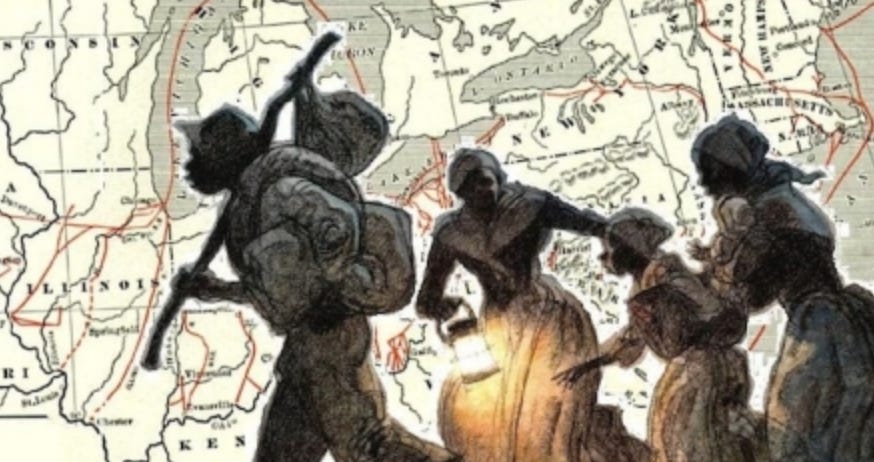
The slaveholding South constructed an entire infrastructure to strengthen slavery: networks of plantation roads, ports for transporting enslaved people, postal routes that carried pro-slavery legislation, and economic systems designed to extract maximum profit from Black bodies. Every piece of that world was engineered to tighten the chains.
And yet, the very roads meant to move enslaved people from one plantation to another became pathways to freedom in the night.
The ports that trafficked human beings became escape routes out of bondage. Northern wealth, often built through industries that were entangled in the slave economy, quietly helped fund safe houses and abolitionist newspapers (like those of Sarah Moore Grimké and William Lloyd Garrison). Even the government’s postal system – created to maintain political order – carried abolitionist messages that led to freedom.
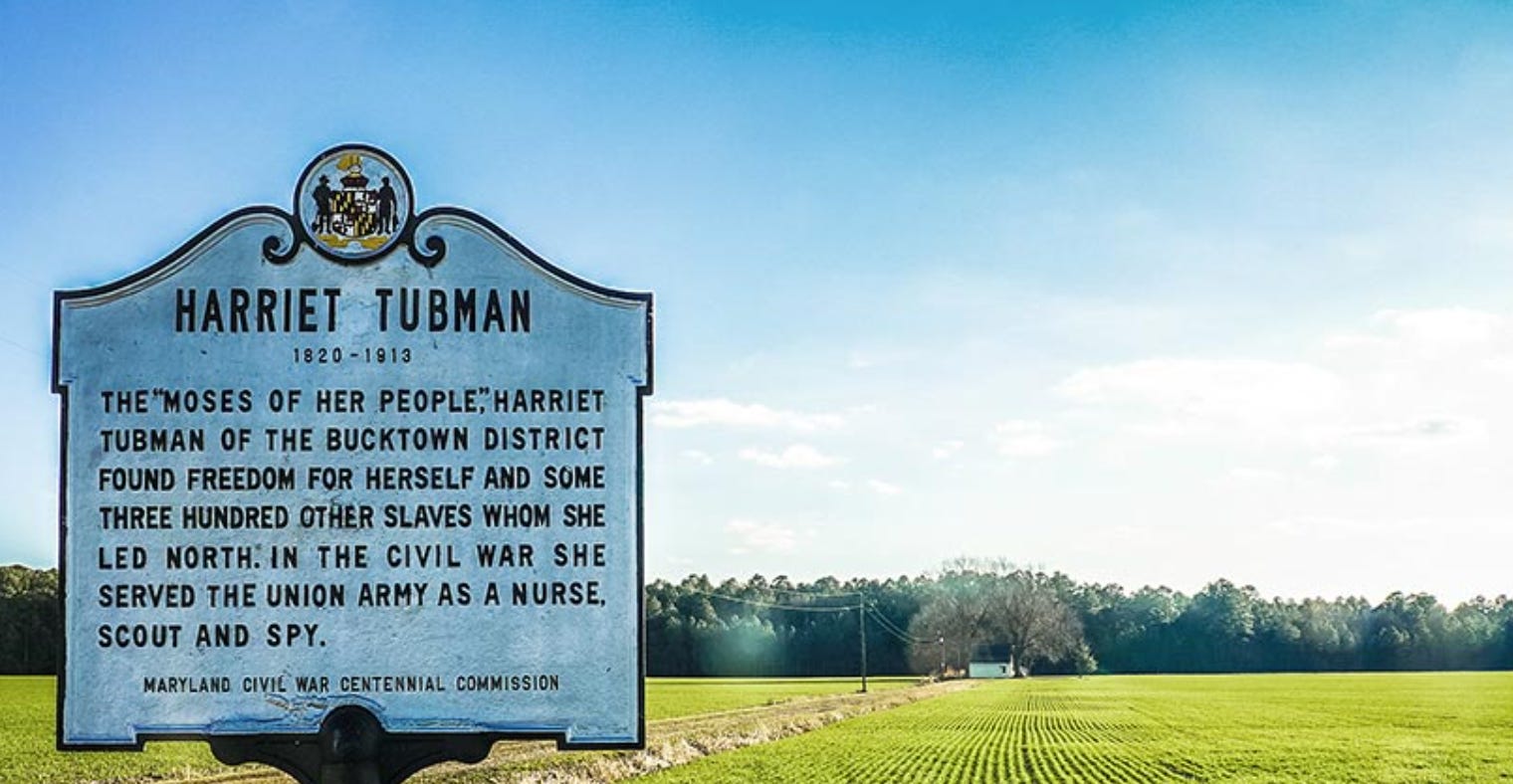
The Underground Railroad reminds us that empire cannot fully control what it builds. God’s people have always known how to bend tools of oppression into tools of liberation.
And that pattern is still alive today.
Take the smartphone. Companies have been known to produce phones in supply chains full of inequity, yet the same device has become one of the most powerful civil rights tools on earth. A smartphone recorded the murder of George Floyd, and that single video ignited the largest racial justice movement of our lifetime.

Around the world, oppressed communities use smartphones to document violence, expose corruption, and break the silence that authoritarian governments depend on.
What empire built for consuming content, people have used for confronting injustice.
Or consider Amazon – one of the largest corporate empires in history. Its cloud servers and digital infrastructure help it reach near global domination. And yet it was these very tools workers used to organize against Amazon’s labor practices. Union drives, strike funds, and internal communication networks often run on the same platforms that Amazon profits from. On Staten Island, the workers who unionized the first Amazon warehouse used wages paid by Amazon to fund the resistance against Amazon. This is economic jiu jitsu: the weight of empire turned against itself.
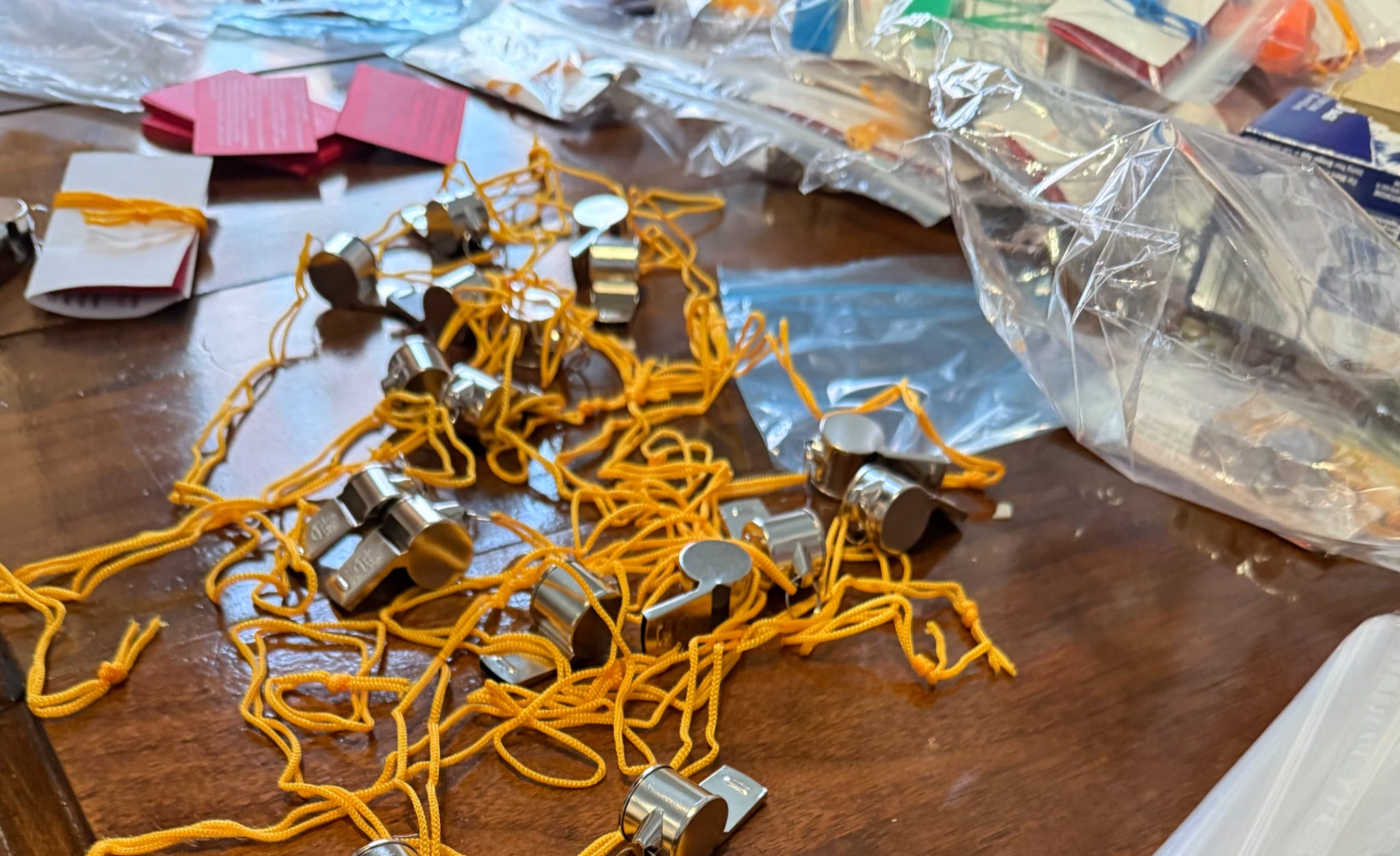
Just last week I sat in a coffee shop in Covington assembling whistle kits that were then distributed to immigrants all over Cincinnati, to be used as a warning for others when ICE comes to town. The whistles were bought on Amazon, but are being used to subvert the empire of domination and discrimination.
And today, a local immigrant family received groceries from Kroger, where the CEO earns 502x more than his minimum wage employees. To this family I also delivered gift cards from Walmart and Target, and handed over a twenty-dollar bill for diapers (which bears the face of an oppressive, cruel President) — all corporations and leaders with whom I have a lot of angst — whose goods are now being used to aid an immigrant family in building a solid foundation in America, subverting the Domination System by utilizing the very tools empire built.
At times, we need to boycott, divest and sanction. We must! Other times, we can bend the tools meant to oppress into tools that lead to freedom. Like the Underground Railroad, we can take pathways and networks meant to control, and reroute them toward justice.
This is the spirit of Joanna in Luke 8, a woman whose resources came from the household of Herod, but whose loyalty belonged to Jesus. She took what the empire gave her and redirected it toward the Beloved Community.
The question for us during this season of Advent is not whether we live inside systems shaped by empire. We do. The question is whether we will allow those systems to shape us, or will we learn the holy art of subversion: to take what empire builds and repurpose it for freedom, truth, and healing. Because God has always been in the business of transforming what was meant for harm into the very thing that brings liberation.
This is the way of Jesus: birthing freedom in the midst of injustice.
I absolutely love this. I love the biblical reference, the difference in call to action, and the examples in how, historically, this is what good people have done. Well done!